Stone GuidesChoosing
Quartz vs Quartzite: What Is the Difference?
The names are almost the same, but one is made in a factory and the other is cut from the earth. Here is what that means for sealing, heat, sun and price.
Quartz and quartzite sound like the same thing. They are not. It is one of the questions people ask us most, so here is the plain version.
Quartz countertops are made in a factory from crushed quartz and resin. Quartzite is a natural stone, cut from the earth like granite. That one difference decides almost everything else: sealing, heat, sun and price.
Quartz Is Made. Quartzite Is Natural.
Quartz countertops are engineered. A maker crushes natural quartz crystals and binds them with resin. MSI, a large supplier, says its quartz “contains up to 93% natural quartz crystals.” The resin holds it all together. MSI calls quartz “an engineered surface.”
Quartzite is a rock. The Natural Stone Institute says “Quartzite is a metamorphic rock that is formed from sandstone.” Metamorphic means heat and pressure deep in the earth changed it into a new, denser rock. The Natural Stone Institute says quartzite “can be of exceptional strength, density, and hardness.”
Use Natural Stone, a natural stone education website, puts it simply: quartzite is “a highly-prized natural stone, not to be confused with engineered quartz surfacing.”
So when someone says “quartz,” ask them which one they mean. It changes the answer to every question below.
Sealing: The Biggest Practical Difference
Quartz never needs sealing. MSI says “quartz is a nonporous surface, meaning it does not require sealing, polishing, or reconditioning.” Cambria says its quartz countertops “never require sealing, polishing, or reconditioning.”
Quartzite does. Because it is natural stone, it has tiny open spaces. Stone distributor Arizona Tile says “For a quartzite product, it is recommended that it be sealed to extend its longevity.” We seal every natural stone slab before we install it, quartzite included.
How often should quartzite be resealed? Sources do not agree on one schedule, so instead of guessing, use the simple test MSI describes: put a few drops of water on the stone. MSI says “If it absorbs and darkens the stone within 5-15 minutes, it’s time to re-seal.”
If you never want to think about sealing, quartz wins this one.
Heat
Quartz has resin, and resin does not like high heat. MSI’s newest heat guide, updated in August 2026, says “quartz surfaces are safe up to about 150°F,” and Cambria says its quartz “is not heat-proof.” Boiling water is 212°F, so even a pot of pasta water is too hot to set straight on quartz.
Quartzite has no resin, but that does not make it heat-proof either. Even for Taj Mahal quartzite, which MSI calls “very solid and heat resistant,” MSI says to “always use trivets in the kitchen to avoid ‘thermal shock’ or harm to the sealer.” Thermal shock means a sudden change in temperature, like a hot pan on a cool stone, which can stress the surface.
Our advice is the same for both: use a trivet. Read more in Can You Put Hot Pans on Quartz, Granite or Quartzite?
Our own stone comparison sheet adds two things. Quartzite is harder than granite, at 7 or more on the Mohs scale, and heavier too. Quartz can get burn marks from heat.
Acid, Vinegar and Strong Cleaners
Both stones need some care here, for different reasons.
With quartzite, the worry is the sealer and the shine. MSI says “Vinegar is corrosive and will eat away at sealers over time and diminish the finish of the stone.” Wipe up lemon juice and vinegar, and skip vinegar as a cleaner.
With quartz, the worry is the resin. MSI says “Products containing bleach, ammonia, or high pH levels can damage the resin that binds the quartz crystals together.”
For both, warm water and a mild dish soap is the safe everyday cleaner.
Florida Sun
This one matters in Tallahassee, where many homes have a sunny breakfast nook, a porch or an outdoor kitchen.
MSI says “Most standard quartz is not recommended for outdoor use as UV exposure can discolor the resin.” Quartzite has no resin, so that warning does not apply to it. If your countertop will sit in strong sun, tell Fernando before you choose.
Looks
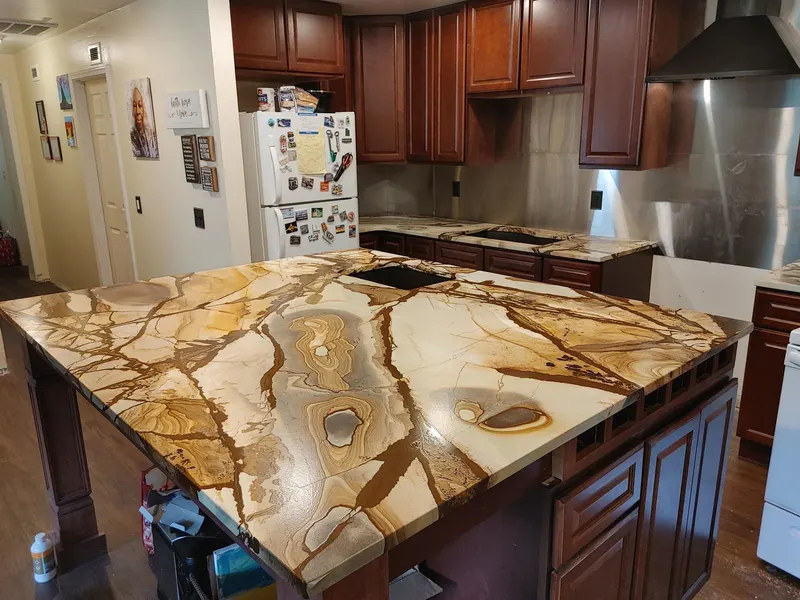
Quartz is made, so its look is chosen by the maker. Quartzite comes out of the earth the way it is, with its own veins and movement, and every slab is different.
One warning from the trade: not every stone sold as quartzite really is. SlabWise, a company that makes software for countertop shops, says “Some slabs sold as quartzite in stone yards are actually marble or dolomitic marble.” That matters because marble is softer and reacts to acid. If you fall in love with a “quartzite,” ask the person cutting it what it really is.
Cost in Florida
For a rough idea, SlabWise published these installed Florida prices per square foot in July 2026:
| Stone | Low | Typical | High |
|---|---|---|---|
| Quartz | $55 | $85 | $140 |
| Quartzite | $65 | $100 | $180 |
| Premium or exotic quartzite | $120 | $175 | $250 and up |
So quartzite usually costs more than quartz, and rare quartzite can cost a lot more. Our own price comes from a free estimate. See How Much Do Countertops Cost in Tallahassee?
Side by Side
| Quartz | Quartzite | |
|---|---|---|
| What it is | Crushed quartz and resin, made in a factory | Natural stone formed from sandstone |
| Sealing | Never (MSI, Cambria) | Yes (Arizona Tile). We seal it before install |
| Heat | Up to about 150°F (MSI, 2026). Use a trivet | No resin, but still use a trivet (MSI) |
| Watch out for | Bleach, ammonia, high pH cleaners | Vinegar and acids wearing the sealer |
| Strong sun | Most standard quartz is not for outdoor use (MSI) | No resin to discolor |
| Typical Florida price | About $85 a square foot | About $100 a square foot |
Which One Is Right for You?
Pick quartz if:
- You want no sealing, ever.
- You like a planned, even look.
- Your kitchen does not get strong direct sun on the counters.
Pick quartzite if:
- You want real natural stone with its own veins.
- Your counters get strong sun, or the stone is going outside.
- You are fine with checking the seal now and then.
How We Handle Either One
Whichever you choose, Fernando builds a wooden template right on your cabinets, so the stone fits your real walls. Once you choose your stone, it is usually 7 to 10 days from the template to install day, and the install itself takes about one day. Natural stone like quartzite is sealed before we install it.
If you are standing in a showroom wondering which one you are looking at, call us. We would rather answer a question now than have you surprised later.
Sources
- MSI, Protecting Your Quartz Countertop From Heat (updated Aug 26, 2026)
- Natural Stone Institute, Sandstone and Quartzite
- Natural Stone Institute, Care and Cleaning
- Use Natural Stone, Granite vs Quartzite
- MSI, Q Premium Natural Quartz FAQ (Jan 27, 2024)
- MSI, A Practical Guide for the Everyday Care of Quartz Countertops (Dec 11, 2023)
- MSI, How to Clean and Seal Quartzite Countertops (updated Oct 14, 2026)
- MSI, The Ultimate Guide to Quartz Countertops (Feb 20, 2024)
- Cambria, Planning and Care
- Arizona Tile, Sealing Natural Stone
- SlabWise, How to Explain Quartzite Maintenance to Homeowners
- SlabWise, Cost of Countertop Installation in Florida (updated July 10, 2026)
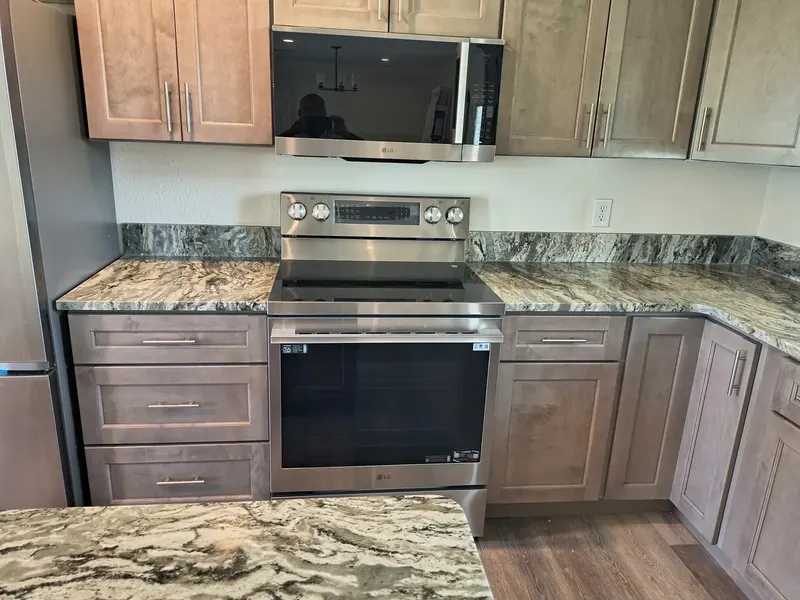
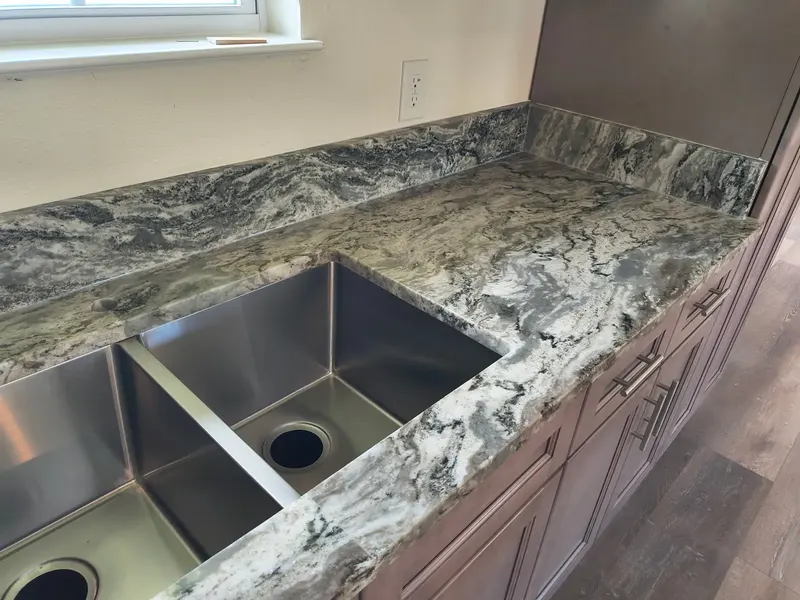
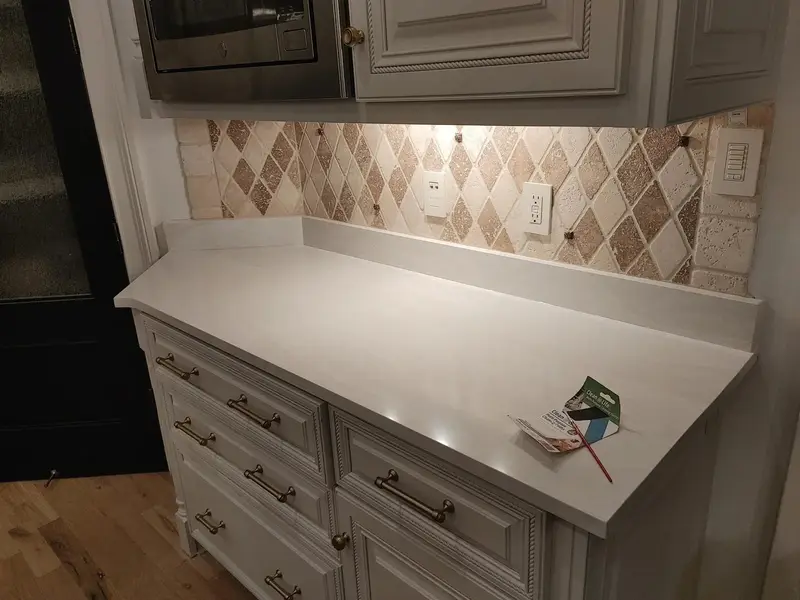
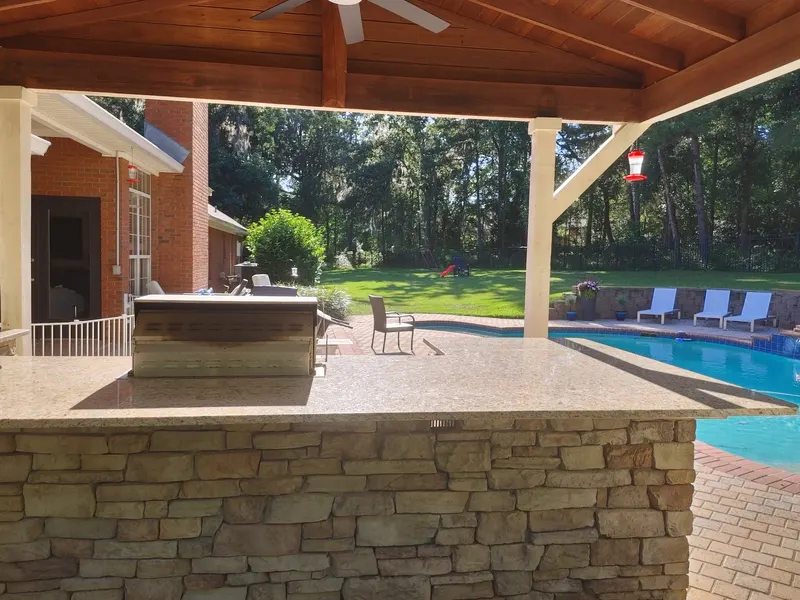
Fernando's Recent Work
Every photo is a job Fernando templated and installed himself. See all our work