Stone GuidesSpills
How to Remove Stains From Granite Countertops
Most granite stains come out at home. How to tell oil, food, ink, metal and water apart, the fix for each, and why a dark wet patch may just need time to dry.
Granite is hard to stain. The Natural Stone Institute says the space in granite “capable of harboring a staining agent is very slight.” Still, it can happen. MSI, the stone supplier, says “Oils, wine, coffee, and even certain acidic foods can seep into the surface.” The good news is that most granite stains come out at home.
The steps below come from the Natural Stone Institute, the trade group for the natural stone industry, and from MSI.
First: Wait Until It Is Dry
Before you treat anything, let the counter dry completely. A dark patch on wet granite may not be a stain at all.
MSI says honed and leathered granite “may still show marks or discoloration when wet, particularly on black granite; this is usually harmless and will disappear when the surface dries.”
If the spot is gone once the stone is dry, there was nothing to fix.
Name the Stain
The Natural Stone Institute says “Identifying the type of stain on the stone surface is the key to removing it.” If you are not sure what caused it, the Institute says to “play detective.” Where is it, what color is it, and what usually sits there?
Oil (cooking oil, grease, lotion). The Institute says “An oil-based stain will darken the stone.” It is usually near the stove or where bottles sit. Our oil stain guide covers it step by step.
Food, coffee and tea. The Institute says these “May cause a pinkish-brown stain and may disappear after the source of the stain has been removed.” For one that stays, it says to clean indoors with “12% hydrogen peroxide (hair bleaching strength) and a few drops of ammonia.”
Ink and marker. The Institute says “Clean with bleach or hydrogen peroxide (light colored stone only!) or lacquer thinner or acetone (dark stones only!)” On dark granite, that means lacquer thinner or acetone.
Rust and metal. The Institute says “Iron or rust stains are orange to brown in color and follow the shape of the staining object.” These are the hardest. Our rust guide explains why to go slowly.
Hard water. MSI says “Hard water is high in mineral content, which leaves behind stone-damaging mineral deposits.”
Whatever you try, use one product at a time and rinse with plain water between them. The Institute warns: “DO NOT MIX BLEACH AND AMMONIA! THIS COMBINATION CREATES A TOXIC AND LETHAL GAS!”
Two Home Poultices From MSI
A poultice is a paste that pulls a stain back out of the stone as it dries.
For most stains, MSI says to “Mix a paste of baking soda and water that has the consistency of sour cream.” Spread it on the stain, cover it with plastic wrap, and “Let set for 24 hours, then remove the poultice, and clean the area.” If the stain is still there, repeat it.
For hard water stains, MSI uses “a simple mixture of baking soda and 3% hydrogen peroxide,” mixed “until it becomes a thick, uniform paste.” Cover it with plastic wrap that has small holes poked in it and wait 24 hours. Then wipe it with a soft damp cloth.
The Natural Stone Institute’s own poultice method, with more steps, is in our oil stain guide. It says “It may take up to five applications for difficult stains.”
A Dull Spot Is Not a Stain
MSI says “acids can still etch granite countertops. This is especially the case for black granite or dark gray varieties.” An etch is a dull or lighter mark in the shape of the spill, and a poultice will not fix it. Wipe up lemon, vinegar and wine quickly on dark granite.
Honed Granite Needs More Care
Honed granite has a matte finish, and MSI says it stains more easily: “Even sealed, honed granite counters can discolor or stain from food and drink spills.” It also says “Wiping liquids across the surface can spread the mess, especially on honed granite.” Blot, do not wipe.
When to Call
MSI says “If your counter has stains that are difficult to remove, or scratches, contact a stone care professional for repair.” Call us too if you are not sure what the stain is. A phone call costs nothing.
Keeping Stains Away
- Wipe spills right away, and blot instead of wiping.
- Keep oil bottles and wet metal cans off the bare stone.
- Keep the seal in good shape. MSI says “Regular sealing helps prevent food and liquid stains.” We seal every natural stone slab before we install it. Our sealing guide has the water drop test.
Sources
- Natural Stone Institute, Stains
- Natural Stone Institute, Granite
- MSI, Granite Stain Removal: How to Get Stains Out Fast (Jul 25, 2025)
- MSI, Easy Care and Maintenance for Granite Countertops (Jul 3, 2017)
- MSI, Granite Countertops 101 (Apr 22, 2021)
- MSI, How to Clean Honed Granite Countertops (Jun 5, 2025)
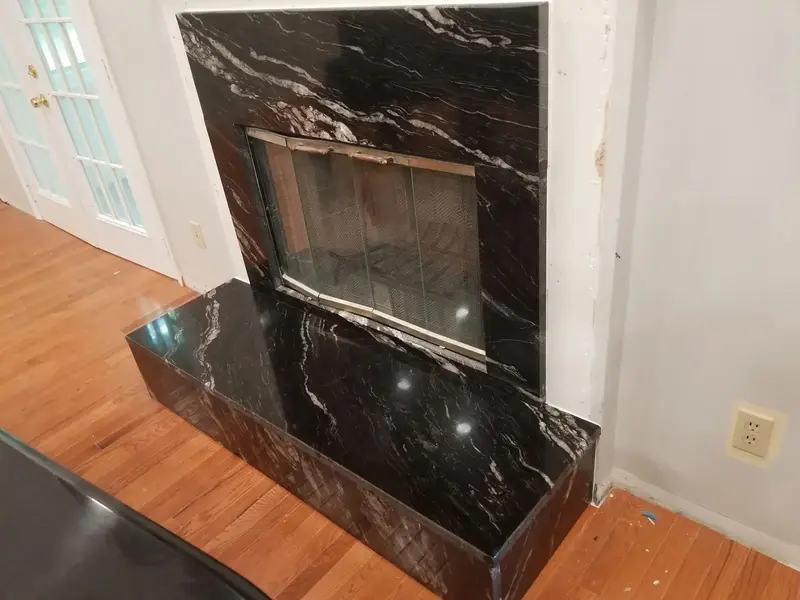
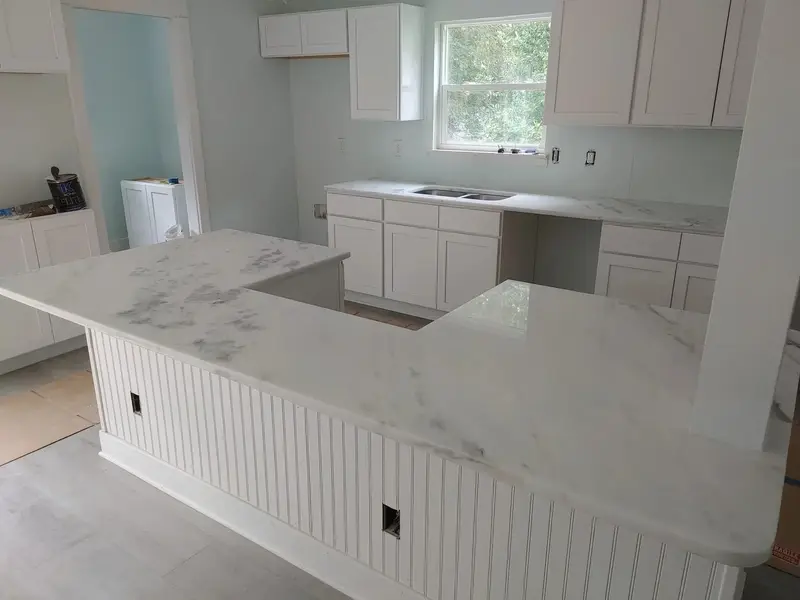
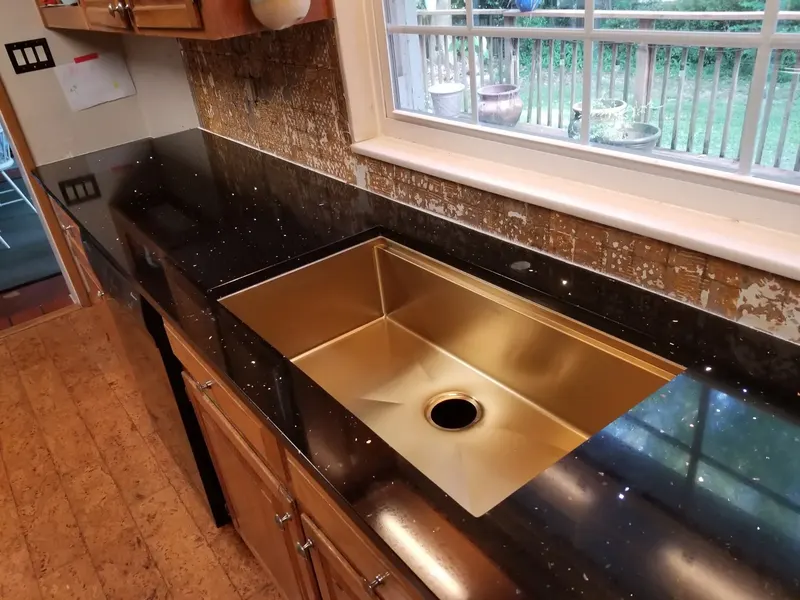
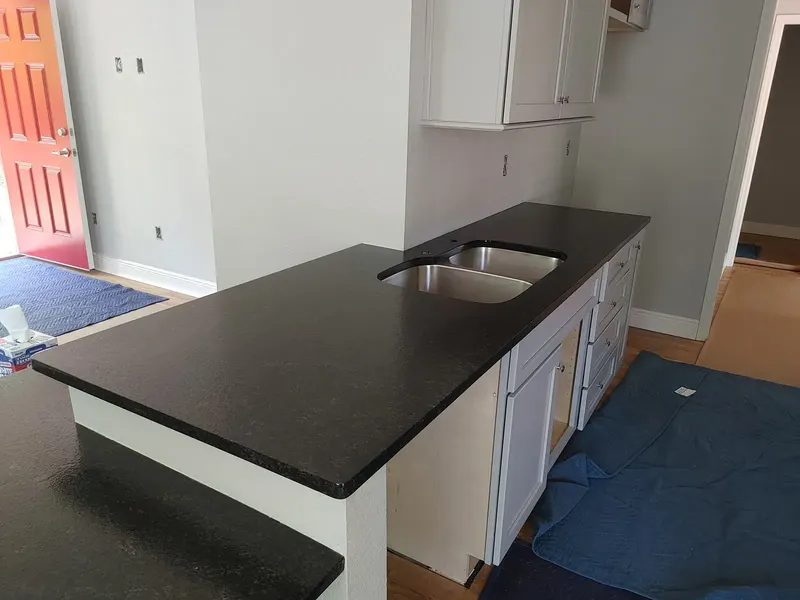
Fernando's Recent Work
Every photo is a job Fernando templated and installed himself. See all our work