Stone GuidesChoosing
Granite vs Quartz Countertops: Which Is Right for You?
Granite is cut from the earth. Quartz is made from crushed stone and resin. Here is how they compare on heat, stains, scratches, care and Florida prices.
“Granite or quartz?” is one of the questions people ask us most. The two can look alike from across the room, and they cost about the same in Florida. But they are made in very different ways, and that changes how they handle heat, stains and cleaning.
Here is the short answer. Granite is natural stone, cut from the earth, and it handles heat better. Quartz is made from crushed quartz and resin, and it never needs sealing. Neither one is “better.” The right one depends on how you cook and how much care you want to give it.
What Each One Is
Granite is a natural rock made of several minerals. One granite sample the U.S. Geological Survey studied was 40% K-feldspar, 35% plagioclase (another feldspar) and 20% quartz. Granite is cut from the earth and sliced into slabs. Because it is natural, no two slabs look exactly alike.
Quartz countertops are engineered. A maker crushes natural quartz crystals and binds them with resin. MSI, one of the large suppliers, says its quartz “contains up to 93% natural quartz crystals.” The rest is mostly the resin that holds it together. That resin is the reason quartz behaves differently from granite with heat and with harsh cleaners.
So the simplest way to remember it: granite is a rock. Quartz is a rock that was taken apart and put back together with glue.
Heat: Granite Handles It Better
This is the biggest practical difference.
The Natural Stone Institute says granite “is typically heat resistant up to temperatures of ±250°C (±480°F).” It also says “direct application of localized heat sources is discouraged.” In plain words: granite can take a lot of heat, but it is still smart not to set a hot pan straight on it.
Quartz is a different story because of the resin. MSI’s newest heat guide, updated in August 2026, says “quartz surfaces are safe up to about 150°F.” Its chart lists even boiling water (212°F) and fresh coffee as not safe for direct contact. MSI also warns that “Placing hot pots or pans directly on the countertop can cause thermal shock and potentially damage the resin binder.” Cambria, another maker, says plainly that its quartz “is not heat-proof.”
What this means in your kitchen:
- With granite, a trivet is a good habit.
- With quartz, a trivet is a must, even for a pot of boiling water.
If you cook a lot and tend to slide pans off the stove onto the counter, granite forgives that habit more.
Our own stone comparison sheet sums it up the same way: granite takes heat, though heat can cause hairline cracks over time, and quartz can get burn marks.
Stains and Sealing: Quartz Needs Less
Granite is natural, so it has tiny spaces inside it. The Natural Stone Institute says the space in granite that can hold a stain “is very slight,” with water absorption of “0.05% to 0.40%” by weight. That is very low for a stone.
Does granite need sealing? The Natural Stone Institute says “Most granite countertops do not need to be sealed,” and also that “many granite countertops receive additional benefit from being sealed.” We seal every natural stone slab before we install it, with a sealer that soaks into the stone to help it resist stains. Keep in mind what sealing does and does not do: the Natural Stone Institute says sealing “does not make the stone stain proof, rather it makes the stone more stain resistant.”
Quartz has no open spaces to fill. MSI says “quartz is a nonporous surface, meaning it does not require sealing, polishing, or reconditioning.” Cambria says the same about its quartz.
So if you never want to think about sealing, quartz is the easier choice.
Scratches: Both Are Hard
Both stones are hard enough for everyday kitchen work. The reason is the same mineral: quartz.
On the Mohs hardness scale, which runs from 1 (soft) to 10 (diamond), the U.S. Geological Survey lists quartz at 7 and feldspar at 6. Granite’s main minerals include feldspar and quartz, and the Natural Stone Institute calls granite “one of the hardest of the dimension stone types.”
Quartz countertops are mostly quartz crystals. Cambria says its quartz is “naturally harder than granite.” Keep in mind that this comes from a quartz maker comparing its own product, so we give it less weight.
The honest takeaway: both resist scratches well. Neither is a cutting board. MSI says cutting right on quartz “can dull your knives and potentially leave marks on the surface,” and the same common sense applies to granite.
Cleaning: Simple for Both, With One Difference
For granite, the Natural Stone Institute says to clean “with a neutral cleaner, stone soap, or a mild liquid dishwashing detergent and warm water,” then rinse and dry with a soft cloth.
For quartz, MSI says the same basic thing: a soft cloth “with warm water and a mild dish soap.” The difference is what to avoid. MSI warns that “Products containing bleach, ammonia, or high pH levels can damage the resin that binds the quartz crystals together.” Cambria lists bleach and oven cleaners among the products to keep off its quartz.
So with quartz, read the label on your spray cleaner. With granite, skip harsh cleaners too, but there is no resin to worry about.
Looks: One of a Kind, or Designed
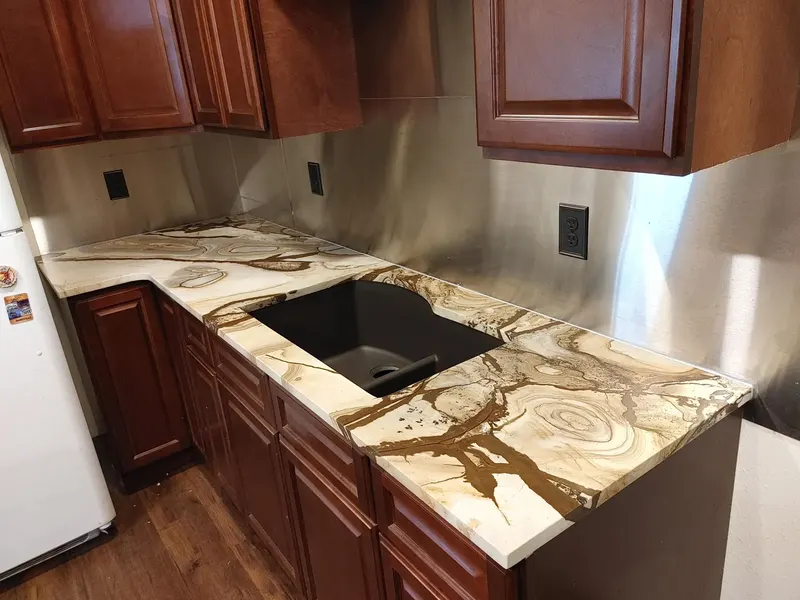
Granite comes out of the ground the way it is. Every slab has its own grain, flecks and movement. Some people love that. They want a countertop no one else has.
Quartz is made, so its look is chosen by the maker, not by nature. If you want a calmer, more planned look, ask to see quartz colors next to granite and decide with your own eyes.
There is no wrong answer here. It is only about what you like to look at every morning.
Florida Sun and Outdoor Kitchens
Many Tallahassee homes have a covered porch or an outdoor kitchen. If your stone will sit outside, this matters.
MSI says “Most standard quartz is not recommended for outdoor use as UV exposure can discolor the resin.” MSI also says quartz “can fade or discolor if exposed to direct sunlight for long periods.” Granite has no resin, so that warning does not apply to it, but any stone outside has its own needs.
If you are thinking about stone outside, or by a sunny window, ask Fernando before you choose.
Cost in Florida
Prices change, and every kitchen is different. For a rough idea, SlabWise, a company that makes software for countertop shops, published these installed Florida prices per square foot in July 2026:
| Stone | Low | Typical | High |
|---|---|---|---|
| Granite | $50 | $75 | $130 |
| Quartz | $55 | $85 | $140 |
SlabWise also says the Panhandle “run[s] a bit lower” than the state as a whole. The point for you: granite and quartz overlap a lot on price. The stone you pick within each type, the edges and the cutouts often move the price more than granite versus quartz. Our own price comes from a free estimate, once we hear what you want. Read How Much Do Countertops Cost in Tallahassee? for more.
Side by Side
| Granite | Quartz | |
|---|---|---|
| What it is | Natural stone | Crushed quartz and resin |
| Heat | Up to about 480°F (NSI) | Up to about 150°F (MSI, 2026) |
| Sealing | Most do not need it (NSI). We seal every natural stone slab | Never needs sealing (MSI, Cambria) |
| Harsh cleaners | Avoid them | Avoid them. Bleach and ammonia can damage the resin (MSI) |
| Outdoors | No resin, so MSI’s sun warning does not apply | Most standard quartz is not for outdoor use (MSI) |
| Look | Every slab one of a kind | Chosen by the maker |
So Which One Should You Pick?
Pick granite if:
- You cook a lot and set hot things down without thinking.
- You want a stone that is truly one of a kind.
- The stone will be outside or in strong sun.
Pick quartz if:
- You never want to think about sealing.
- You want an even, calm look.
- You are careful with trivets and with what cleaners you use.
How This Plays Out in a Tallahassee Kitchen
About half of Tallahassee’s homes were built before 1990, according to the U.S. Census Bureau’s 2024 American Community Survey. In older homes, walls are rarely straight. Granite and quartz are both cut in straight lines and cannot bend to fit a wall, so the fit depends on the measurement.
That is why Fernando builds a wooden template right on your cabinets for every job, granite or quartz. Once you choose your stone, it is usually 7 to 10 days from the template to install day, and the install itself takes about one day. You can read the whole path on How It Works.
The best choice is the stone that fits the way you live, cut to fit your real walls.
Sources
- MSI, How to Maintain Quartz and Keep It Stain Free (Sep 27, 2025)
- MSI, Protecting Your Quartz Countertop From Heat (updated Aug 26, 2026)
- Natural Stone Institute, Granite
- Natural Stone Institute, Sealing Stone
- Natural Stone Institute, Care and Cleaning
- MSI, A Practical Guide for the Everyday Care of Quartz Countertops (Dec 11, 2023)
- MSI, The Ultimate Guide to Quartz Countertops (Feb 20, 2024)
- MSI, Q Premium Natural Quartz FAQ (Jan 27, 2024)
- Cambria, Planning and Care
- Cambria, Quartz vs Granite
- U.S. Geological Survey, Mineral hardness (Mohs scale)
- U.S. Geological Survey, granite sample 03MW0110
- U.S. Census Bureau, 2024 American Community Survey, Year Structure Built (via Census Reporter)
- SlabWise, Cost of Countertop Installation in Florida (updated July 10, 2026)
Fernando's Recent Work
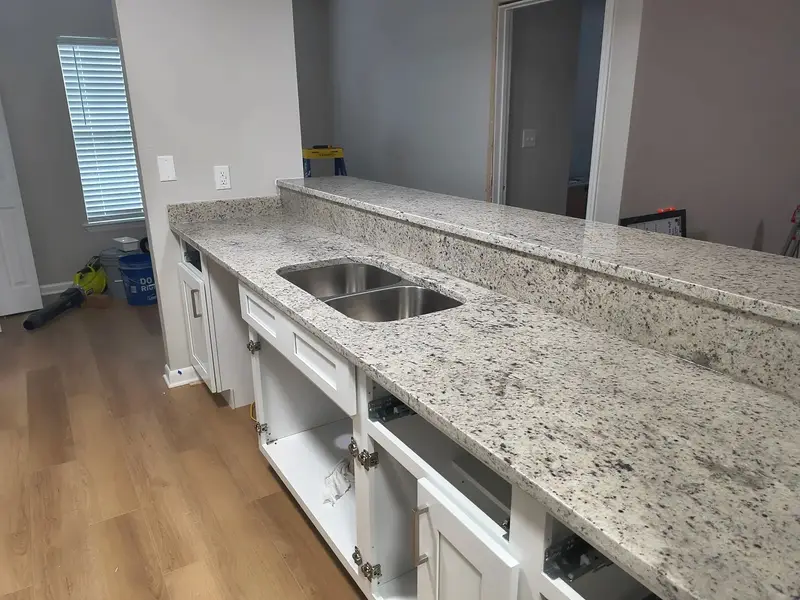
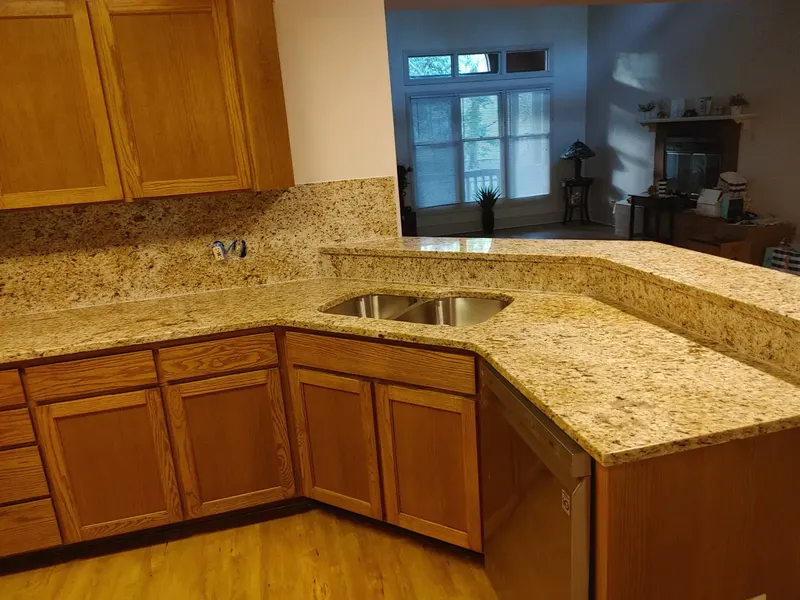
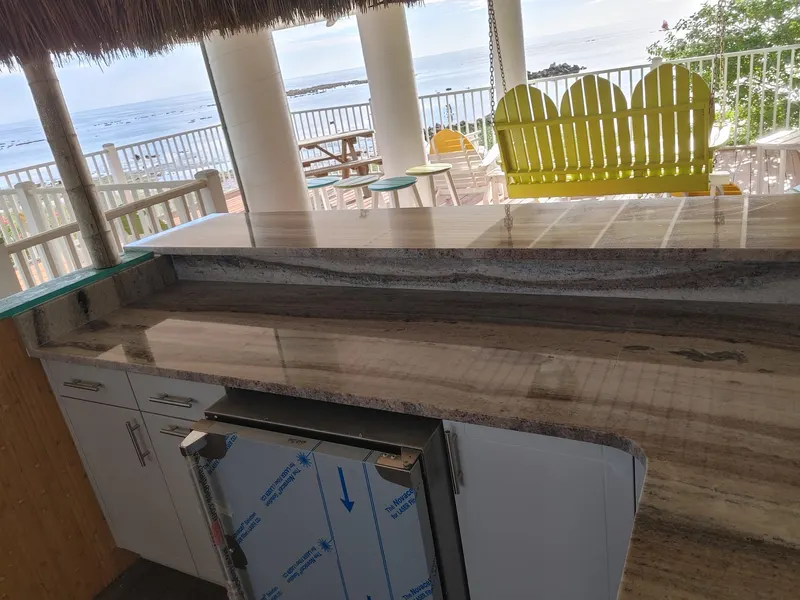
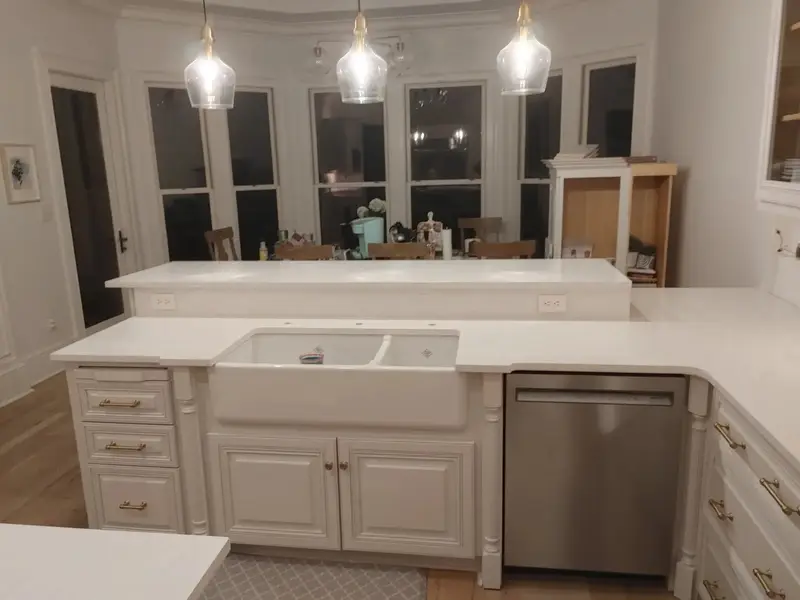
Every photo is a job Fernando templated and installed himself. See all our work